What Silicon Carbide Ceramic Is and Why It Matters in Engineering
Silicon carbide is a non-oxide engineering ceramic composed of silicon and carbon, with the chemical formula SiC. It is commonly referred to as carborundum and is often compared to diamond due to its high hardness and wear resistance.
In nature, silicon carbide exists as the rare mineral moissanite. Natural deposits are extremely limited and are not suitable for industrial use. Nearly all silicon carbide used in engineering applications is synthetically produced under controlled conditions.
Silicon carbide was first identified in 1891 by Edward G. Acheson during experiments aimed at synthesizing diamond. By 1893, the Acheson furnace enabled industrial-scale production of SiC. Later developments, including the Lely crystal growth method introduced in the mid-20th century, established silicon carbide as both a structural ceramic and a functional electronic material.
Silicon Carbide Crystal Structures and Common Material Grades
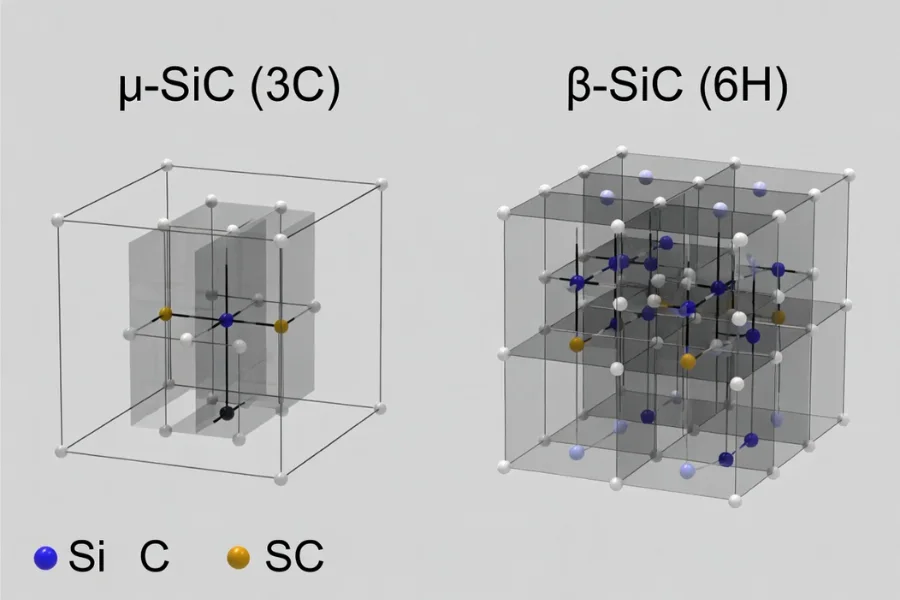
Silicon carbide exhibits multiple crystal structures, known as polytypes, which differ in atomic stacking sequence and influence material performance.
Crystal Structures
- β-SiC has a cubic crystal structure similar to diamond.
- α-SiC includes hexagonal and rhombohedral structures with more complex arrangements.
Common Engineering Grades
- Reaction bonded silicon carbide
- Sintered silicon carbide
- Nitride bonded silicon carbide
- Chemical vapor deposited silicon carbide
- SiAlON bonded silicon carbide
Each grade presents different combinations of density, porosity, thermal conductivity, and manufacturability, which directly affect suitability for specific operating environments.
How Silicon Carbide Ceramic Is Manufactured
Foundational Production Routes
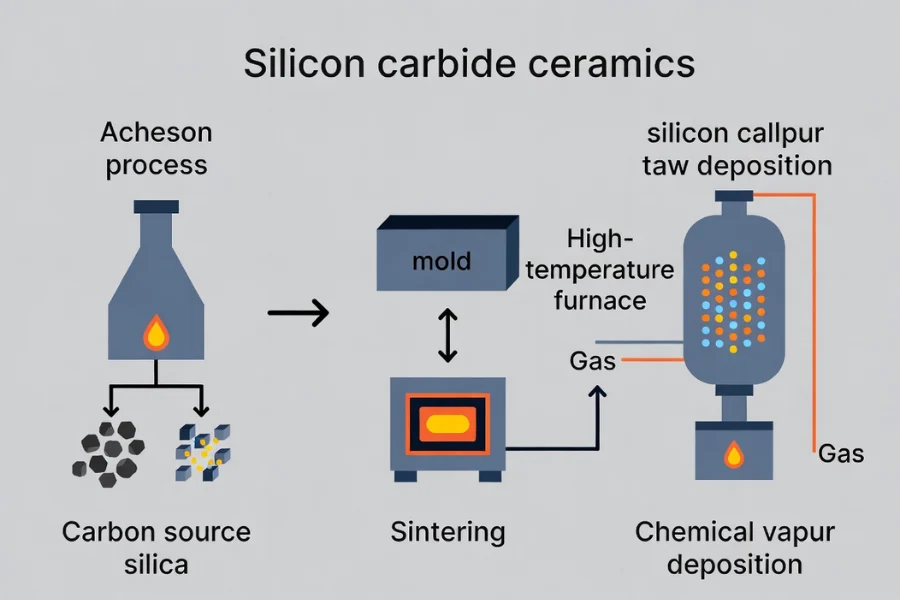
The Acheson process remains a primary method for producing silicon carbide powder. Quartz sand and carbon are reacted at high temperature to form SiC crystals.
The Lely method is used for high-purity crystal growth through sublimation and controlled recrystallization, typically for electronic-grade material.
Advanced Manufacturing Approaches
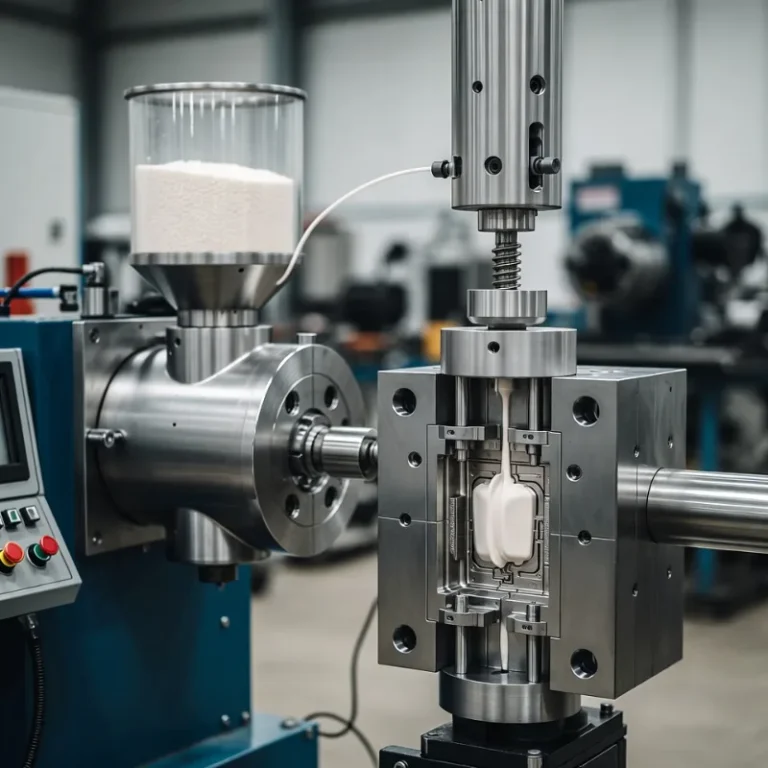
Chemical vapor deposition is applied when uniform density and high purity are required, particularly for thin coatings or precision components. Physical vapor transport is used for producing large single crystals under tightly controlled thermal conditions.
Modern production systems emphasize stable temperature control, automated process monitoring, and repeatable growth conditions. Industry experience shows that these controls improve consistency and reduce defect formation across production batches.
Quality Control and Certification
Silicon carbide components are commonly evaluated using X-ray diffraction, microstructural inspection, and electrical and thermal performance testing. Semiconductor-grade materials typically require purity levels above 99.9999 percent.
International standards such as ISO 9001, SEMI guidelines, JEDEC specifications, and automotive AEC-Q101 qualification are frequently applied, depending on the intended application.
Key Performance Properties of Silicon Carbide Ceramic
Mechanical Behavior
Silicon carbide has a Mohs hardness of approximately 9.5. Typical compressive strength ranges from 2500 to 2900 MPa, while flexural strength falls between 410 and 550 MPa. The elastic modulus commonly lies in the range of 350 to 400 GPa, supporting high stiffness under load.
Thermal Characteristics
Thermal conductivity typically ranges from 120 to 270 W/m·K. The coefficient of thermal expansion is approximately 4.0 × 10⁻⁶ per degree Celsius. In air, continuous operation is generally limited to about 1200°C, while inert environments allow higher temperature exposure. These properties contribute to strong thermal shock resistance.
Electrical and Chemical Properties
Silicon carbide behaves as a semiconductor and can be doped to achieve n-type or p-type conductivity. Electrical resistivity varies widely depending on temperature and impurity content.
Chemically, silicon carbide exhibits strong resistance to acids and oxidation. At elevated temperatures, a silicon dioxide surface layer forms, slowing further chemical attack. Resistance to alkaline environments is more limited and should be evaluated case by case.
Where Silicon Carbide Ceramic Is Used in Practice
Industrial and Structural Applications
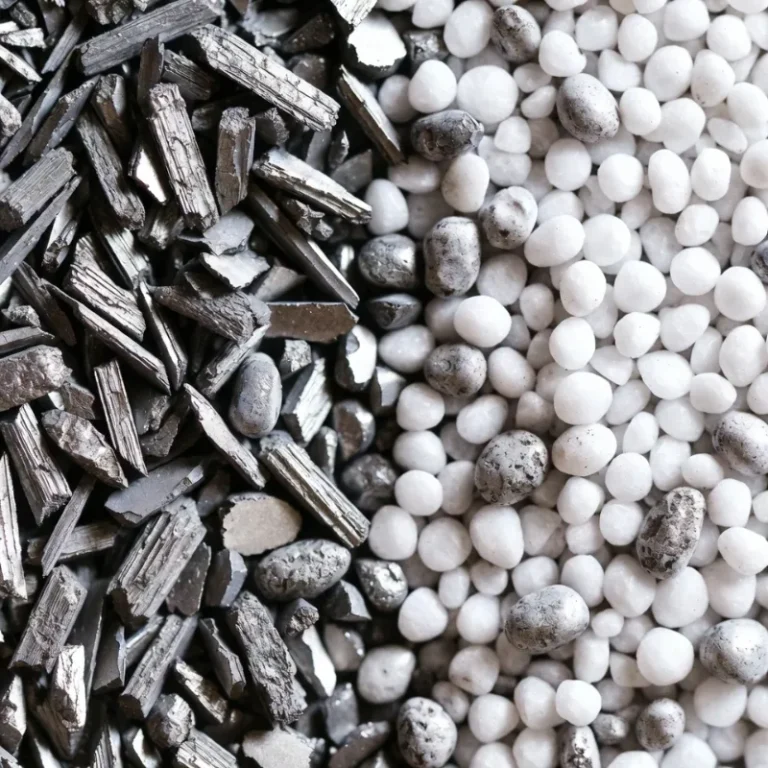
Silicon carbide is widely used in abrasives, cutting tools, and wear components due to its hardness and abrasion resistance. Black silicon carbide is typically applied to hard materials, while green silicon carbide is preferred for precision finishing.
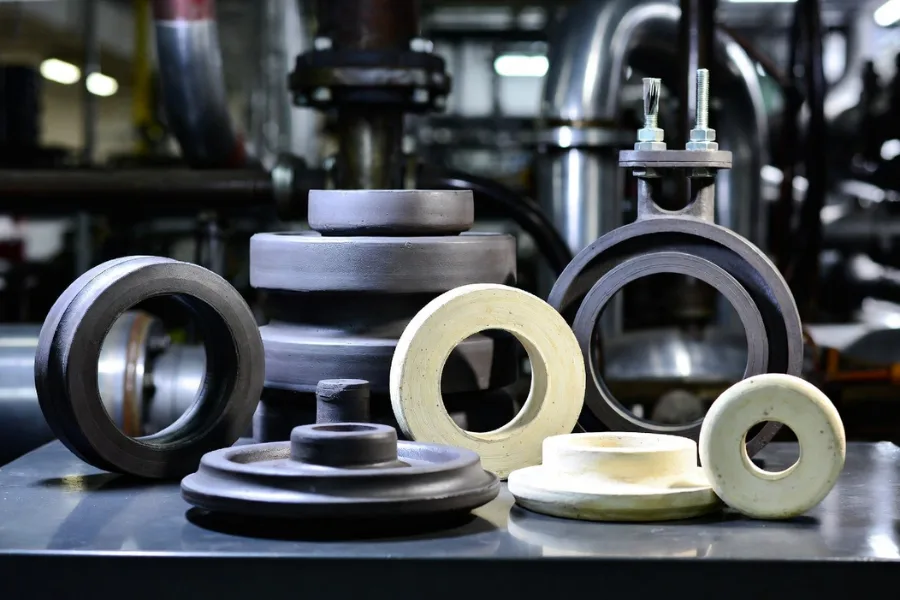
In high-temperature environments, silicon carbide is used for kiln furniture, furnace components, and refractory linings. In many industrial settings, service life exceeds that of conventional refractory materials under similar conditions.
Mechanical components such as seals, bearings, rollers, and pump parts benefit from silicon carbide’s combination of wear resistance, thermal stability, and low thermal expansion.
Advanced and Energy-Related Applications
Silicon carbide is also used in power electronics and energy systems where high temperature capability and thermal conductivity are critical. In typical power conversion systems, SiC-based components enable higher operating temperatures and improved efficiency compared with conventional materials.
Electric vehicles, renewable energy systems, and aerospace equipment increasingly use silicon carbide where weight reduction, thermal control, and durability are required. In these applications, material selection is driven by operating limits rather than cost alone.
Ceramic Processing and Glaze Use
Within ceramic manufacturing, silicon carbide is commonly used for kiln shelves and load-bearing fixtures. In glaze formulations, controlled additions of SiC can generate gas-forming effects during firing, producing crater or bubble textures when firing conditions are carefully managed.
How Silicon Carbide Compares with Other Engineering Materials
Compared with silicon, silicon carbide offers higher breakdown voltage, higher operating temperature, and superior thermal conductivity. These advantages come with higher material and processing costs.
Relative to alumina ceramics, silicon carbide provides higher hardness and better thermal performance but is more difficult to process and typically more expensive.
When compared with gallium nitride, silicon carbide benefits from established manufacturing methods and strong thermal performance, while gallium nitride excels in high-frequency applications.
Emerging Applications and Technology Trends
Industry development indicates growing use of silicon carbide in smart power grids, next-generation communication infrastructure, and high-temperature electronics. Ongoing improvements in crystal growth and processing continue to reduce manufacturing cost and expand feasible component sizes.
In many industrial implementations, silicon carbide contributes to lower energy loss and improved system efficiency, supporting long-term reliability and sustainability goals.
Selection Considerations
High-purity silicon carbide is typically required for electronic and semiconductor applications. Medium and lower purity grades are suitable for abrasives, refractory components, and structural parts.
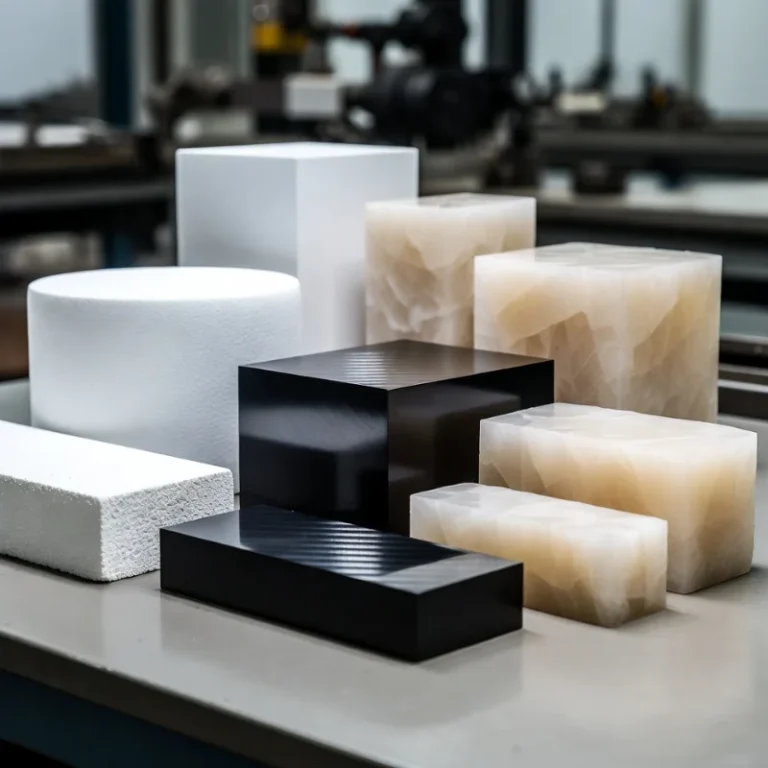
Material form selection depends on function. Granular material is used for abrasives, dense ceramic shapes for structural components, and single-crystal wafers for electronic devices.
Cost evaluation should consider service life, operating conditions, and maintenance requirements in addition to initial material price.
Frequently Asked Questions
Does silicon carbide melt at high temperature?
Silicon carbide does not melt under normal conditions. Instead, it decomposes at temperatures above approximately 2700°C. This decomposition behavior defines its upper thermal stability limit and makes SiC suitable for high-temperature applications where dimensional stability is required.
Is silicon carbide electrically conductive?
Silicon carbide is a semiconductor rather than a true conductor or insulator. Its electrical conductivity depends on impurity doping and operating temperature, allowing it to function as semi-insulating or conductive material in different industrial and electronic applications.
What materials can silicon carbide abrasives process?
Silicon carbide abrasives are commonly used to process hard and brittle materials such as glass, ceramics, stone, and hard alloys. They are also effective on non-ferrous metals and composite materials where sharp cutting action is required.
How does silicon carbide compare with alumina ceramics in practice?
Compared with alumina ceramics, silicon carbide offers higher hardness, better thermal conductivity, and superior performance at elevated temperatures. Alumina is generally easier to process and lower in cost, making it suitable for less demanding industrial conditions.
What density range is typical for silicon carbide ceramic?
Dense silicon carbide ceramics typically have a density between 3.10 and 3.21 g/cm³, depending on the manufacturing method and material grade. Density affects thermal conductivity, mechanical strength, and overall component performance.
How is silicon carbide quality evaluated?
Silicon carbide quality is evaluated through purity analysis, crystal structure inspection, and detection of surface or internal defects. Key thermal, electrical, and mechanical properties are also verified to confirm suitability for specific applications.
Summary and Engineering Considerations
Silicon carbide ceramic combines mechanical strength, thermal stability, and chemical resistance within a single material system. These characteristics make it suitable for demanding industrial environments where conventional ceramics or metals reach performance limits.
For applications requiring engineered silicon carbide components or custom ceramic structures, C-CERAMIC provides precision ceramic materials and structural parts designed to meet defined thermal, mechanical, and environmental requirements.