Alumina Ceramics in Practice, A Quick Engineering Overview
Alumina ceramics, also known as aluminum oxide ceramics or Al₂O₃ ceramics, are industrial technical ceramics widely used for electrical insulation, wear resistance, chemical stability, and high-temperature operation. They are often treated as a reference material when engineers evaluate ceramic solutions for demanding environments.
In practice, alumina ceramics are selected not because they maximize a single extreme property, but because they provide a stable and predictable balance of mechanical strength, electrical insulation, thermal stability, and cost efficiency. This balance explains their widespread use across electronics, machinery, chemical processing, medical devices, and high-temperature systems.
Before reviewing material grades, properties, and manufacturing details, the following sections summarize when alumina ceramics are typically a suitable choice and when alternative materials may be more appropriate.
Engineering Decision Snapshot, When to Use Alumina Ceramics
Alumina ceramics are commonly selected when
- Electrical insulation is required across a wide temperature range
- Continuous operating temperatures approach 1000–1650°C
- Components are exposed to abrasion or sliding wear
- Chemical resistance to acids, alkalis, and solvents is required
- Dimensional stability and long service life are priorities
- Cost-to-performance balance is more critical than extreme toughness
Alumina ceramics may not be the best option when
- Severe thermal shock is expected
- High fracture toughness or impact resistance is required
- Very high thermal conductivity is the primary requirement
- Rapid heat dissipation is critical for power electronics
This snapshot allows engineers to quickly determine whether alumina ceramics merit further evaluation before reviewing detailed material data.
Alumina Ceramics, Definition, Role, and Engineering Relevance
Alumina ceramics are oxide-based technical ceramics primarily composed of aluminum oxide. They are among the most widely used ceramic materials due to mature manufacturing methods, stable performance, and broad availability across purity grades and geometries.
Within industrial ceramics, alumina is often treated as a baseline material. It is frequently compared against zirconia, aluminum nitride, silicon nitride, and silicon carbide during material selection. Its role is defined less by extreme specialization and more by predictable behavior across mechanical, electrical, thermal, and chemical domains.
Key advantages of alumina ceramics include high hardness, wear resistance, electrical insulation, chemical inertness, thermal stability, and biocompatibility. These characteristics support both structural and functional ceramic components in industrial systems.
How Alumina Ceramics Are Classified by Purity, Structure, and Performance
Alumina Purity Levels and Their Impact on Performance
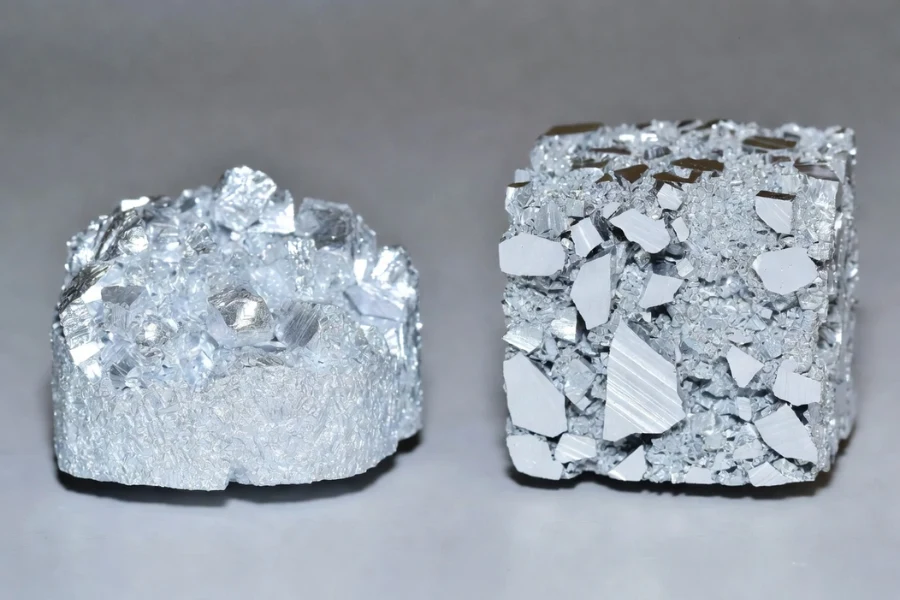
Alumina ceramics are commonly specified by aluminum oxide content, as purity directly affects electrical, chemical, and thermal behavior.
75–85% Al₂O₃ grades are used for general industrial wear parts where cost control is prioritized over electrical or thermal performance.
95–99% Al₂O₃ represents the most widely used industrial range. These grades balance mechanical strength, insulation performance, chemical resistance, and cost.
99.5–99.9% Al₂O₃ grades offer improved electrical insulation stability, chemical inertness, and microstructural consistency. They are commonly specified for electronic substrates, medical components, and high-temperature systems.
Common Alumina Types Used in Industrial Applications
Alumina hydroxide is primarily used in glazes, flame retardants, and water treatment applications. It also serves as a precursor material in alumina production.
Calcined alumina is produced through high-temperature processing to remove chemically bound water. High-purity calcined alumina is widely used in precision ceramic components and electrical insulation.
Tabular alumina is sintered at very high temperatures to achieve stable crystal structures. It is commonly used in refractory linings and furnace applications requiring thermal stability.
How Additives and Microstructure Influence Performance
Additives such as chromium or titanium may be introduced to modify wear resistance or electrical behavior. Microstructural control also plays a critical role.
Fine-grained alumina ceramics with grain sizes below 5 μm typically achieve higher density and improved wear resistance. Coarser grain structures are often used for general structural components where extreme surface performance is not required.
Key Performance Characteristics of Alumina Ceramics
Mechanical Strength, Hardness, and Brittleness
Alumina ceramics exhibit high hardness and strong resistance to abrasion. Mohs hardness is approximately 9, while Vickers hardness commonly exceeds 1500 HV depending on grade and processing.
Flexural strength values are typically around 55 ksi, or approximately 380 MPa, with compressive strength exceeding 350 ksi. Like most oxide ceramics, alumina is inherently brittle. It offers limited fracture toughness and low tolerance for impact loading. Component geometry and mounting design must minimize tensile stress and stress concentration.
Electrical Insulation and Dielectric Performance
Alumina ceramics are excellent electrical insulators. High volume resistivity and low dielectric loss support stable performance across a wide temperature and frequency range.
Typical dielectric strength is approximately 250 V/mil, with a dielectric constant near 9 at 1 MHz. These characteristics support widespread use in electronic packaging, RF components, and high-voltage insulation.
Thermal Stability and Expansion Behavior
Alumina ceramics maintain structural integrity at elevated temperatures. Continuous operating temperatures up to 1650°C in air are common, with higher limits possible in vacuum environments.
Thermal conductivity is moderate, typically around 30 W/m·K. The coefficient of thermal expansion is approximately 7.9 × 10⁻⁶/°C between 20°C and 650°C. Thermal shock resistance is acceptable for controlled environments but lower than that of non-oxide ceramics.
Chemical Stability and Corrosion Resistance
Alumina ceramics are chemically inert in most industrial environments. They resist attack from many acids, alkalis, and solvents. They do not corrode, rust, or degrade in water.
Biocompatibility further supports their use in medical and biomedical applications where chemical stability and long-term reliability are required.
How Alumina Ceramics Are Manufactured, From Powder to Finished Part
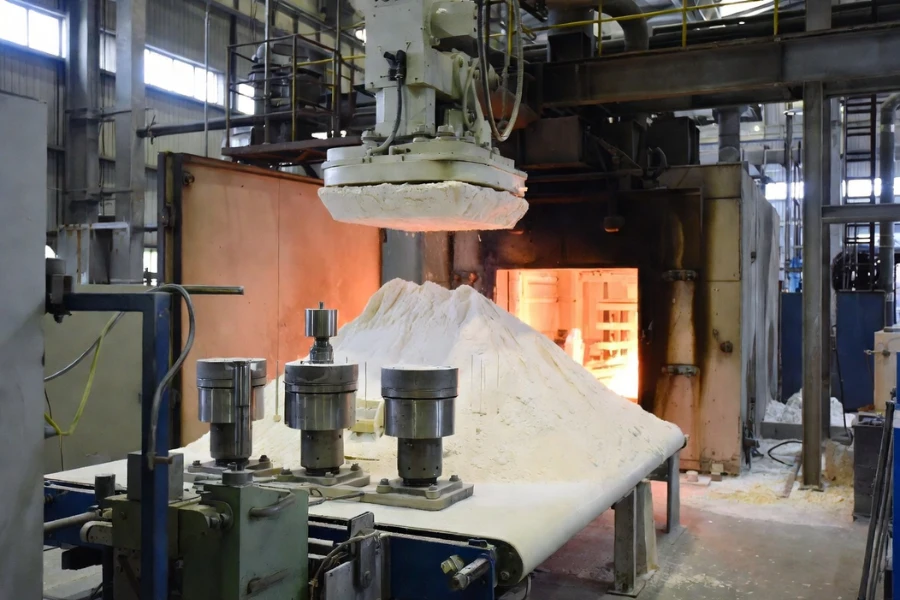
Alumina ceramics are produced from bauxite through the Bayer process. This process includes crushing, alkaline dissolution, precipitation, filtration, and calcination at temperatures above 1000°C to generate high-purity alumina powder.
Forming methods include uniaxial pressing, isostatic pressing, injection molding, extrusion, tape casting, slip casting, and electrophoretic deposition. The selected forming route influences density, geometry, and final performance.
Sintering typically occurs between 1600°C and 1800°C, with linear shrinkage of approximately 20–25%. Microstructural control during sintering is critical for achieving target mechanical and electrical properties.
Post-sintering operations include diamond grinding, polishing, metallization, and surface finishing. Green machining prior to sintering may be used to reduce machining complexity.
Where Alumina Ceramics Are Commonly Used
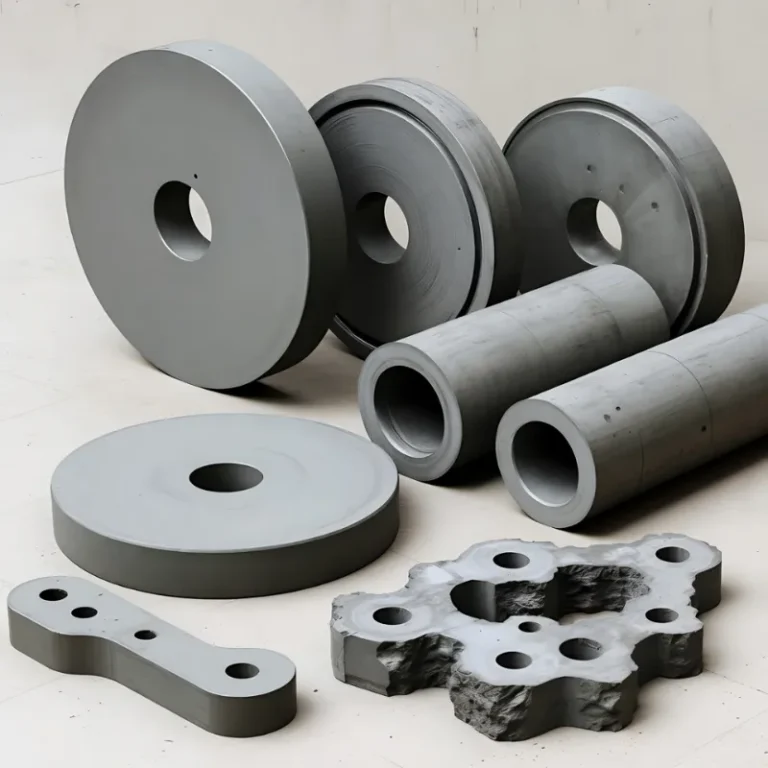
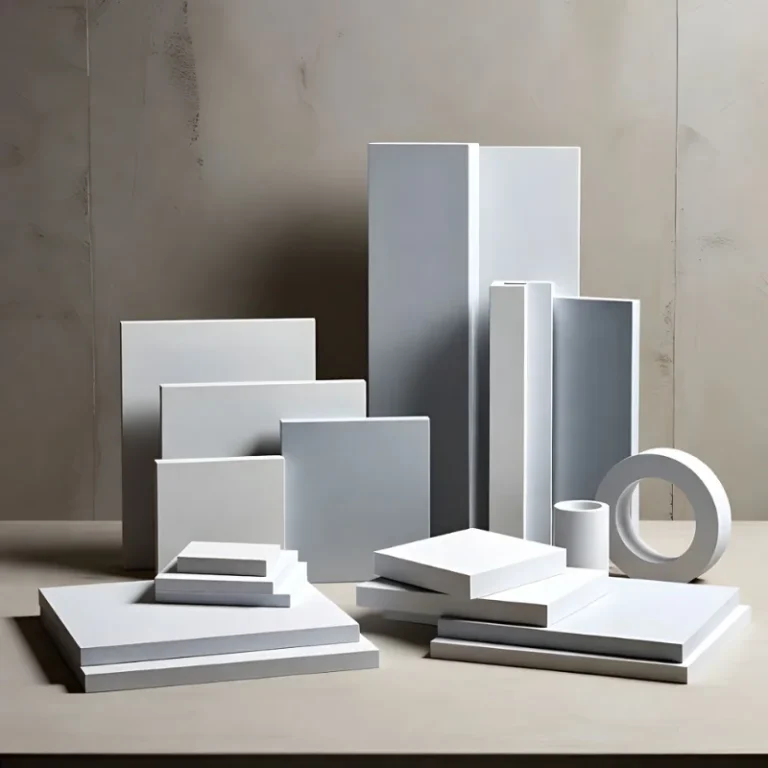
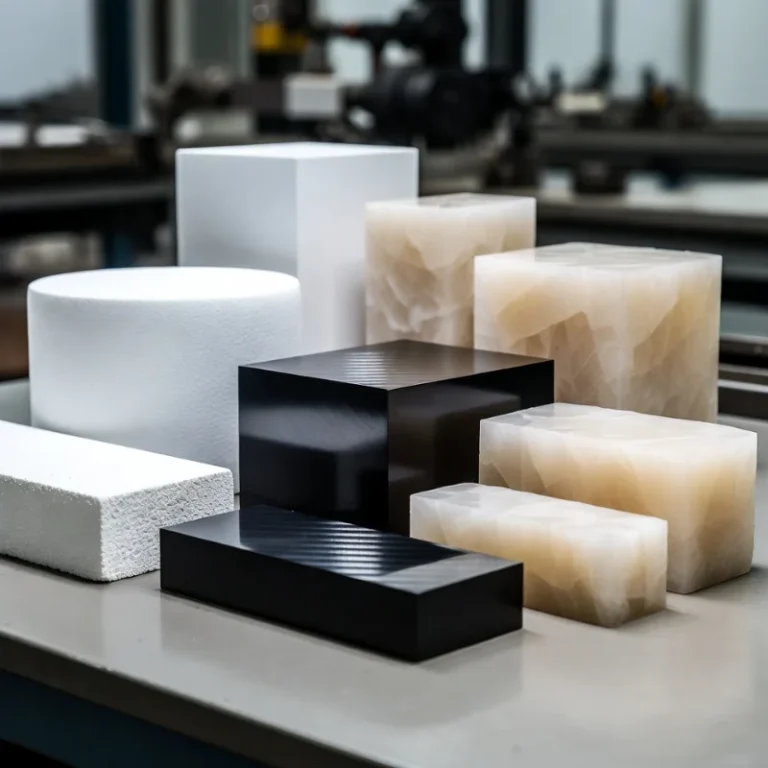
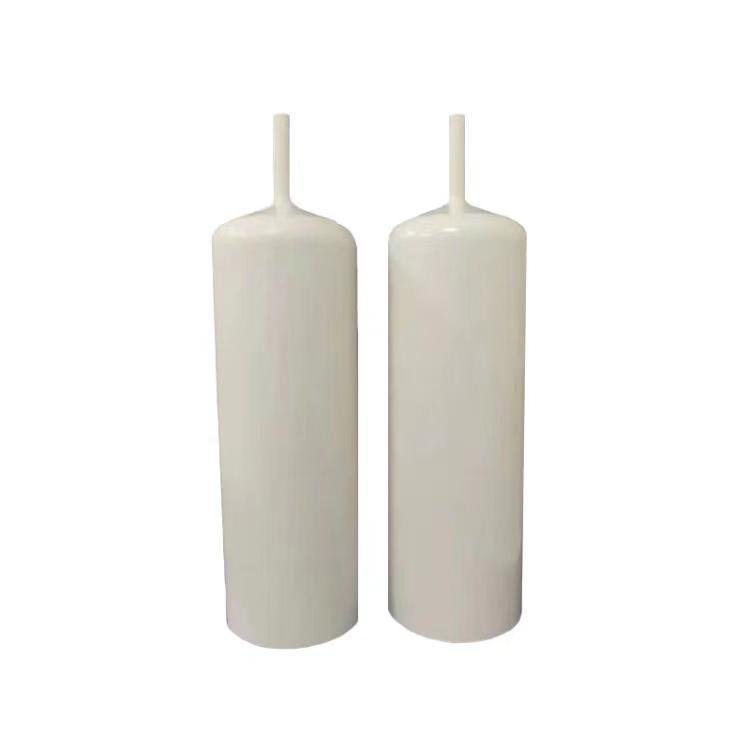
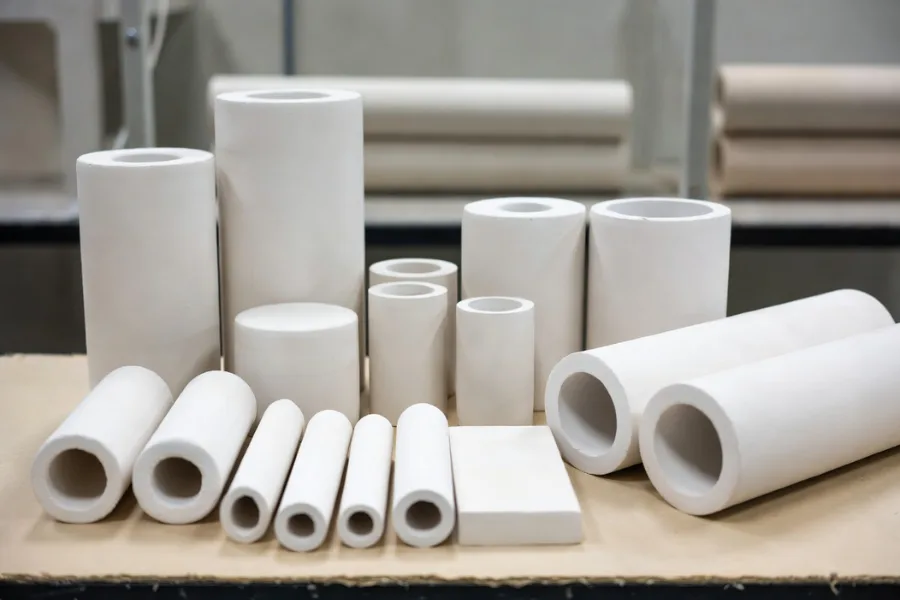
Alumina ceramics are widely used in electrical insulators, electronic substrates, pump seals, valve seats, wear liners, nozzles, furnace components, thermocouple protection tubes, crucibles, laboratory equipment, and medical implants.
In defense and optical systems, specialized alumina ceramics are used for ballistic armor and infrared-transparent windows. Their combination of hardness, thermal stability, and chemical inertness supports long-term reliability in demanding environments.
How to Select and Design with Alumina Ceramics
Material selection should consider operating temperature, mechanical loading, electrical requirements, chemical exposure, and cost constraints.
High-purity grades above 99% are typically selected for electrical insulation and electronic applications. Fine-grained, high-density alumina is preferred for wear-intensive environments.
Design should avoid sharp corners, allow for sintering shrinkage, and accommodate thermal expansion mismatch when integrated with metals. Injection molding supports complex geometries but increases tooling cost. Pressed and machined components offer flexibility for lower production volumes.
Alumina Ceramics Compared with Other Technical Ceramic Materials
Compared with zirconia, alumina offers higher thermal stability but lower fracture toughness. Aluminum nitride provides significantly higher thermal conductivity at higher cost. Silicon nitride offers superior thermal shock resistance and toughness, while silicon carbide supports higher temperatures and thermal conductivity with reduced electrical insulation.
These comparisons reinforce alumina’s role as a balanced, general-purpose technical ceramic rather than a specialized extreme-performance material.
FAQ
What is the maximum operating temperature of alumina ceramics
Alumina ceramics typically support continuous operation up to about 1650°C in air. In vacuum or controlled atmospheres, higher temperatures may be possible depending on purity, grain structure, and component geometry. Practical limits are also influenced by thermal gradients, mechanical loading, and long-term stability requirements.
Are alumina ceramics electrically conductive
No. Alumina ceramics are electrical insulators with high volume resistivity and low dielectric loss. Their insulation performance remains stable across a wide temperature range and generally improves with higher alumina purity, making them suitable for electrical and electronic applications.
Can alumina ceramics be machined
Yes. Alumina ceramics can be machined using diamond-based tools. Precision machining is typically performed after sintering, while green machining before firing may reduce tool wear and simplify complex geometries. Conventional metal-cutting tools are not suitable due to alumina’s hardness.
Why are alumina ceramics considered brittle
Alumina ceramics have an ionic–covalent crystal structure that limits plastic deformation. This produces high hardness and wear resistance but low fracture toughness. Sudden impact or tensile stress can cause cracking, so proper geometry design and compliant mounting are critical.
When should alumina ceramics not be used
Alumina ceramics are not suitable for applications involving severe thermal shock, high impact loading, or where extremely high thermal conductivity is required. In such cases, materials such as silicon nitride, zirconia, aluminum nitride, or silicon carbide may perform better.
Is alumina ceramic better than zirconia ceramic
Neither material is universally better. Alumina offers higher hardness, wear resistance, and high-temperature stability, while zirconia provides significantly higher fracture toughness and impact resistance. The optimal choice depends on whether wear resistance or mechanical toughness is the primary requirement.
Summary and Practical Takeaways for Engineering Applications
Alumina ceramics offer a stable balance of mechanical strength, electrical insulation, thermal stability, and chemical resistance. They are not optimized for impact resistance or extreme thermal shock but deliver predictable long-term performance when properly designed and installed.
In industrial practice, alumina ceramics remain a core material for engineers evaluating ceramic solutions due to mature processing methods and consistent material behavior. Manufacturers and suppliers with experience in technical ceramics, such as C-CERAMIC, are often consulted when component geometry, material purity, and process control directly affect reliability and service life.