Overview of Abrasive Materials in Industrial Finishing
Abrasive grains are hard, sharp materials used to remove material through controlled surface contact under pressure. Common abrasive products include sandpaper, sanding belts, grinding wheels, and discs. In addition to silicon carbide and aluminum oxide, widely used abrasive materials include zirconia alumina, cubic boron nitride, synthetic diamond, ceramic alumina, and garnet.
Among these options, silicon carbide and aluminum oxide dominate industrial usage, accounting for nearly 90 percent of domestically produced abrasive grains. Their widespread adoption is driven by a balance of cutting performance, availability, and cost efficiency across metalworking, woodworking, and non-metallic surface processing.
How Abrasive Grains and Grit Work
Grit Size and Numbering
Grit size is defined by the number of openings per inch in the screening mesh used to classify abrasive particles. Lower grit numbers indicate coarser particles with higher material removal rates, while higher numbers correspond to finer particles for surface refinement. Standard ranges extend from coarse 4-grit to ultra-fine 2500-grit.
Abrasive Identification
Abrasive products are labeled with standardized material codes. Aluminum oxide is identified by the letter “A,” while silicon carbide is identified by “C.” These codes are typically followed by grit size and bonding or coating specifications.
Coating Types
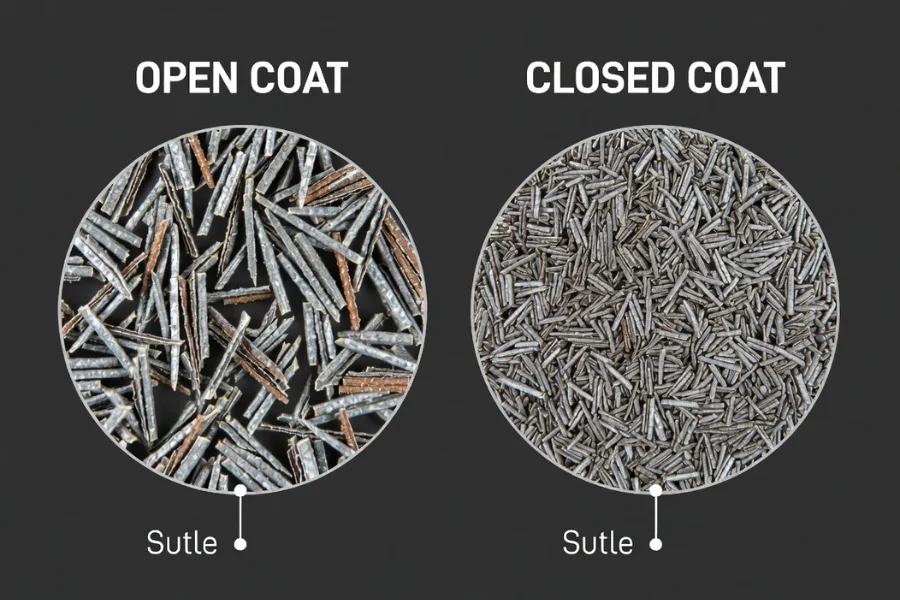
Open coat abrasives provide approximately 60–65 percent grain coverage, reducing loading when sanding soft or resinous materials. Closed coat abrasives provide approximately 90–95 percent grain coverage, increasing cutting density and surface consistency on harder substrates.
Friability and Grain Fracture Behavior
Friability describes an abrasive grain’s tendency to fracture under mechanical stress, exposing new cutting edges. Higher friability improves cutting consistency under low to moderate loads and on brittle or non-metallic materials. Under high loads or when applied to high-tensile metals, excessive grain fracture can accelerate wear and reduce service life. Effective abrasive selection therefore depends on matching friability to both material hardness and applied pressure.
Aluminum Oxide Abrasives – Characteristics and Typical Uses
Aluminum oxide is the most widely used industrial abrasive due to its durability and stable wear behavior. With a Mohs hardness of approximately 9, aluminum oxide provides sufficient cutting capability for most metals while maintaining longer service life under sustained mechanical load.
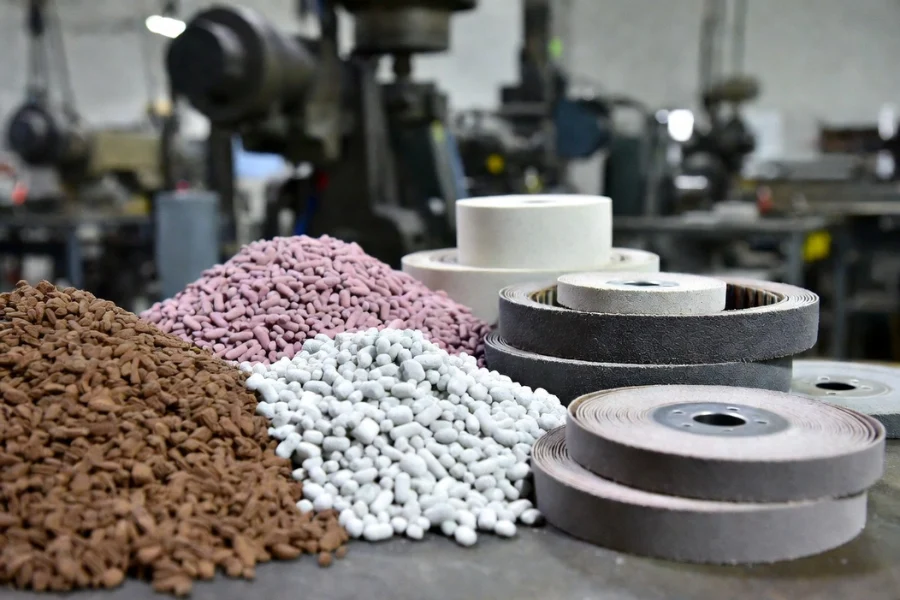
Brown aluminum oxide is semi-friable and optimized for durability. It is commonly used on metals, drywall, fiberglass, wood, and painted surfaces where consistent stock removal is required. White aluminum oxide has higher friability and lower thermal buildup, making it suitable for wood, lacquers, and precision finishing applications. Pink aluminum oxide offers similar behavior to white grades and is often used on softer woods where smoother surface transitions are required.
Aluminum oxide abrasives are widely applied to high-tensile metals such as stainless steel, bronze, and aluminum alloys, as well as bare wood, coated wood surfaces, drywall, fiberglass, and selected plastics. Common product forms include sanding belts for dry operations, grinding wheels, and sanding discs.
In practice, aluminum oxide performs reliably in coarse grinding and general-purpose sanding where consistent pressure is applied. On softer non-ferrous metals such as aluminum, heat buildup can become a limiting factor. In such cases, lubricants or sequential finishing with silicon carbide can reduce thermal loading and surface smearing.
Silicon Carbide Abrasives – Performance and Application Scope
Silicon carbide is among the hardest common abrasives, with a Mohs hardness typically between 9.2 and 9.5. Its sharp, angular grain geometry enables aggressive cutting at low contact pressures. However, its lower fracture toughness results in faster grain breakdown under high mechanical load.
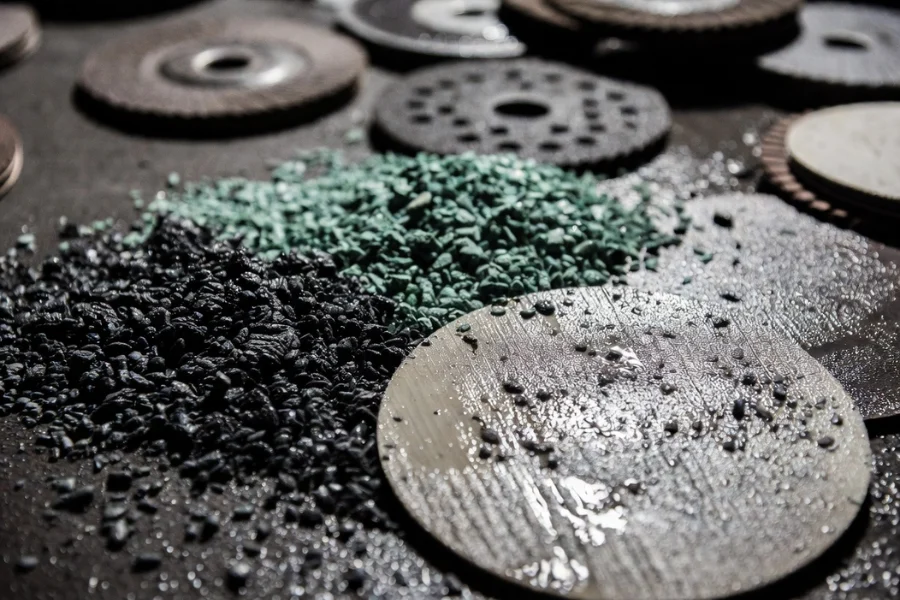
Black silicon carbide is commonly used for non-ferrous metals, ceramics, and hard non-metallic materials. Green silicon carbide offers higher purity and hardness but increased brittleness, making it suitable for fine polishing and precision finishing of glass and stone.
Silicon carbide abrasives are widely applied to non-metallic substrates such as glass, ceramics, stone, marble, plastics, and rubber, as well as low-tensile metals including aluminum and cast iron. Typical product forms include sandpaper suitable for wet sanding, closed-coat sanding belts for controlled finishing, and grinding wheels or sanding discs.
Silicon carbide is most effective in fine finishing, polishing, and wet sanding where lower contact forces are applied. When used on high-strength metals such as steel, rapid grain fracture limits abrasive life and cutting efficiency.
Key Differences and Abrasive Selection Guide
Aluminum oxide and silicon carbide differ significantly in hardness, fracture behavior, durability, and thermal response. Aluminum oxide has a Mohs hardness of approximately 9 and offers high durability with controlled micro-fracture. Silicon carbide is harder, typically measuring 9.2–9.5 on the Mohs scale, and cuts more aggressively at lower pressure but wears faster under high load.
Aluminum oxide is generally preferred for metals and wood due to its durability and process stability. Silicon carbide is better suited for non-metallic materials, coated surfaces, and finishing operations where sharp cutting and thermal control are required. Wet operation is typically limited to silicon carbide, while aluminum oxide abrasives are designed primarily for dry use.
Material-specific selection should follow mechanical and thermal constraints. Steel and stainless steel benefit from aluminum oxide due to higher durability under contact pressure. Aluminum surfaces are best processed using a sequential approach, with aluminum oxide for stock removal followed by silicon carbide for surface refinement. Wood applications favor aluminum oxide for both coarse and fine sanding, while silicon carbide is limited to coatings and inter-coat sanding. Glass, ceramics, stone, plastics, and rubber are better matched with silicon carbide.
Abrasive life and surface quality are often optimized by using aluminum oxide for initial material removal and transitioning to silicon carbide for finishing and polishing. This strategy limits premature grain breakdown while maintaining surface consistency.
Frequently Asked Questions
Which abrasive is sharper in practice?
Silicon carbide is sharper due to its higher Mohs hardness, typically around 9.2–9.5, and its angular grain structure. This allows faster cutting at lower contact pressure. Aluminum oxide is slightly softer, around Mohs 9, but offers greater durability and more stable performance under sustained mechanical load.
Which abrasive is suitable for stainless steel?
Aluminum oxide, especially brown or pink grades, is better suited for stainless steel. Its controlled fracture behavior maintains cutting efficiency under high contact pressure. Silicon carbide fractures too rapidly on high-tensile metals, leading to accelerated wear and reduced abrasive life in steel grinding applications.
Can wet sanding be used?
Wet sanding is appropriate for silicon carbide abrasives due to their chemical stability and ability to dissipate heat in water-assisted processes. Aluminum oxide abrasives are typically designed for dry operation, as prolonged moisture exposure can reduce bonding integrity and negatively affect cutting consistency.
How can abrasive type be identified on products?
Abrasive products are marked with standardized material codes. The letter “A” indicates aluminum oxide, while “C” denotes silicon carbide. These identifiers are usually followed by grit size and bonding information, allowing users to quickly confirm abrasive composition before selecting it for a specific application.
What does friability indicate in abrasive performance?
Friability describes grain fracture behavior. Higher friability improves cutting consistency on brittle or non-metallic materials. However, under high load or on hard metals, excessive grain fracture can shorten abrasive life and reduce overall process efficiency.
How should grit progression be selected?
Grit sizes should progress incrementally, such as 80 to 120 to 180. Skipping more than one grit level increases the risk of deep scratches that finer abrasives cannot remove efficiently, resulting in longer processing time and inconsistent surface finish.
Final Notes on Choosing the Right Abrasive
Abrasive selection is governed by material hardness, tensile strength, contact pressure, and thermal sensitivity. Silicon carbide offers superior sharpness for non-metallic materials and finishing operations, while aluminum oxide provides durability and process stability for metals and wood. In industrial practice, combining both abrasives sequentially often delivers the most consistent balance between efficiency and surface quality.
At C-CERAMIC, abrasive selection and performance are evaluated from a materials engineering perspective. Long-term experience in manufacturing and customizing technical ceramic components provides practical insight into how abrasive behavior interacts with substrate properties, process loads, and surface requirements in real-world applications.